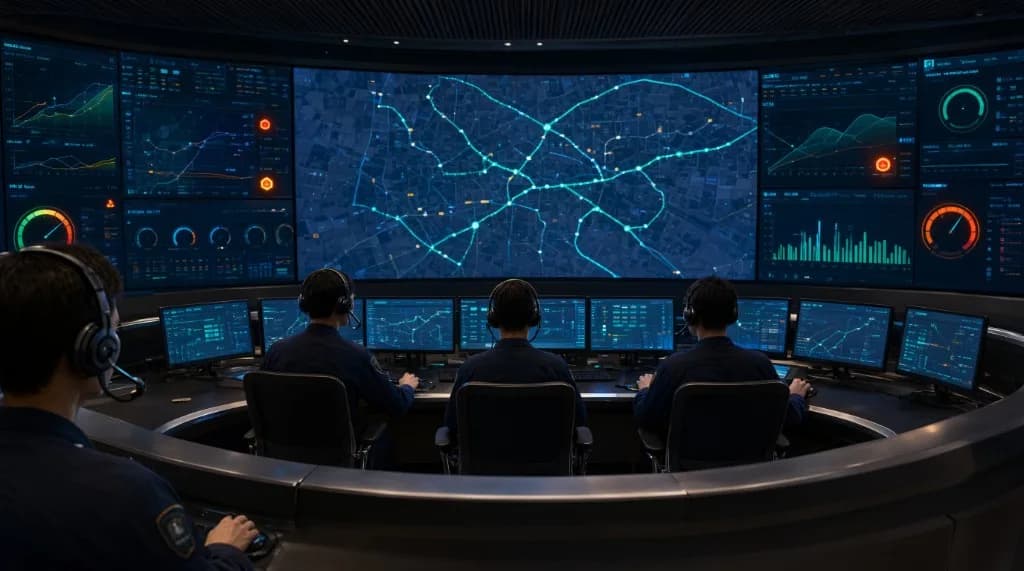
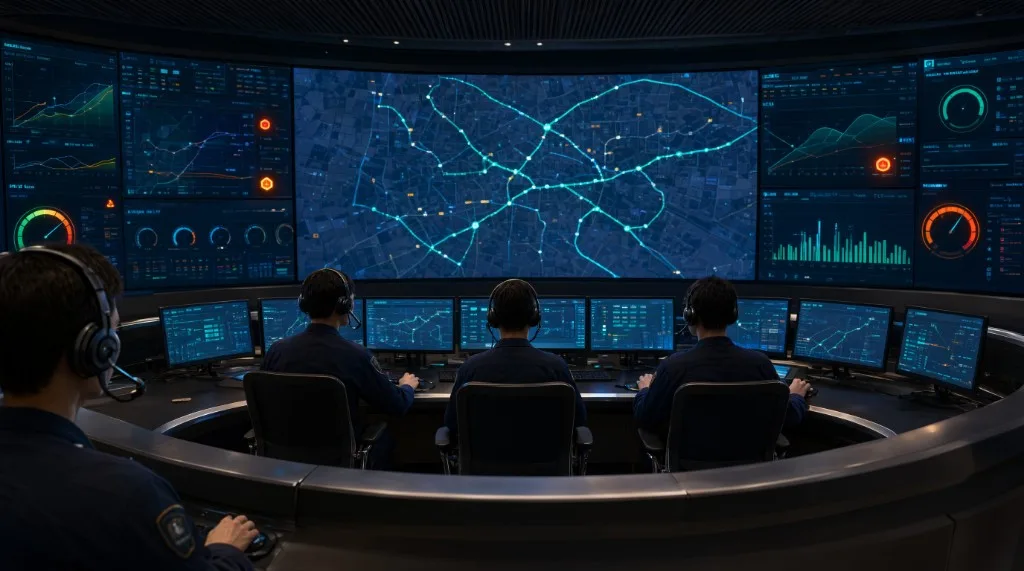
If you have never stood inside a transit control room during rush hour, it is worth picturing what it actually looks like. Screens showing live vehicle positions. Alerts popping up when a bus falls behind schedule. Someone deciding, in real time, whether a delay on one route needs a response before it turns into a bigger problem three stops down the line.
The part passengers never see
This is the part of running a transit network that passengers never see. They just notice whether the bus showed up on time or not. But that split-second decision in the control room, made with good information or bad information, is often what separates a network that runs smoothly from one that constantly feels like it is playing catch-up.
TRVERSE's Intelligent Transport Systems solution exists for exactly this moment. It gives operators and city authorities a live view of the whole network, covering vehicle location, passenger loads, signal priority, and passenger information, all inside one platform. Instead of five separate systems each telling part of the story, there is one shared picture that everyone from the control room to the last stop on the route can actually use.
The pieces that make up real-time awareness
A lot of what counts as "smart" transit comes down to a handful of capabilities working together rather than any single flashy feature. TRVERSE's ITS platform covers:
- Automatic Vehicle Location. GPS and dead reckoning keep a vehicle's position available even if satellite signal drops out briefly.
- Passenger information systems. Updates push through on-board displays, at-stop signage, and digital channels, so a passenger waiting at a stop has the same accurate arrival estimate as someone checking an app.
- GTFS and GTFS-RT publishing. Third-party apps can pull live schedule and arrival data directly from the network, rather than relying on outdated static timetables.
- Traffic signal priority integration. NTCIP and UTMC protocols give transit vehicles a way to request priority at intersections so a bus stuck behind a red light does not throw off the whole schedule.
- Automatic passenger counting with load forecasting. Operators see not just where a vehicle is but how full it is, which matters enormously for planning capacity on busy corridors.
- Incident management. Automated detection, operator alerting, and resolution tracking mean when something does go wrong, it gets flagged and handled with a clear trail rather than getting lost in a shift change.
- Configurable control centre dashboards. Alerting thresholds match what actually matters for a given network instead of a generic one-size-fits-all setup.
Why connected systems beat isolated feeds
None of these are meant to work in isolation. A GPS location feed by itself is just a dot on a map. It only becomes useful when it is tied to passenger counts, signal timing, and an incident log that operators can act on immediately.
Why this changes the relationship between a city and its transit network
There is a version of this that only benefits the operator, and a better version that benefits everyone involved. TRVERSE's approach leans toward the second. City authorities can monitor performance, compliance, and service quality from the same platform operators use to run day-to-day operations. That shared visibility matters because transit performance is rarely a private matter between an operator and its buses. It affects a city's credibility, its climate commitments, and how residents feel about public transport as a viable option instead of a last resort.
This is part of why TRVERSE's platform reports over 500 million in annual ridership and more than 6,000 devices on field across the networks it supports. At that scale, a control room cannot rely on phone calls and guesswork. It needs a system that already knows where every vehicle is, how full it is, and whether anything along the route needs attention right now.
Seeing it work on the ground
The Peshawar BRT network is a good example of what this looks like in practice. TRVERSE deployed real-time vehicle tracking and GTFS-RT feeds for passenger information alongside a full Intelligent Transport System for fleet monitoring, as part of a network that now moves over 300,000 validated journeys a day. That is not a small pilot project. It is a live, high-volume system where the control room's visibility into the fleet has to hold up hour after hour, day after day.
The same logic carried over to Masar Destination in Makkah, where TRVERSE deployed ITS with real-time passenger information in both Arabic and English, tailored to a site that serves a large and constantly shifting mix of domestic and international visitors.
Why real-time beats reactive, every time
The honest truth about transit operations is that things will go wrong. A vehicle will break down. A route will get backed up because of an accident nearby. The question is never whether problems happen, it is how quickly someone finds out and how much information they have when they do.
That is the real value of a connected ITS platform. It does not promise a perfect network with zero disruptions. It promises that when something does happen, the people responsible for fixing it are not the last to know.
Talk to TRVERSE about an ITS demonstration.