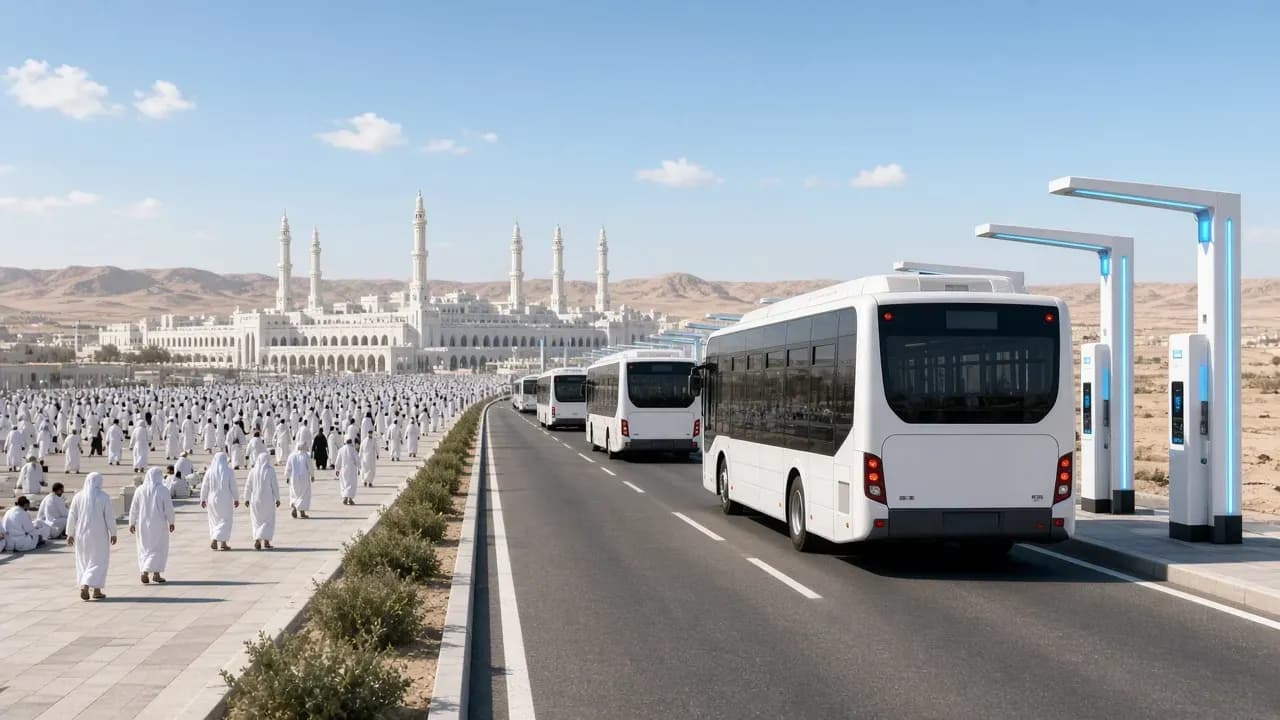
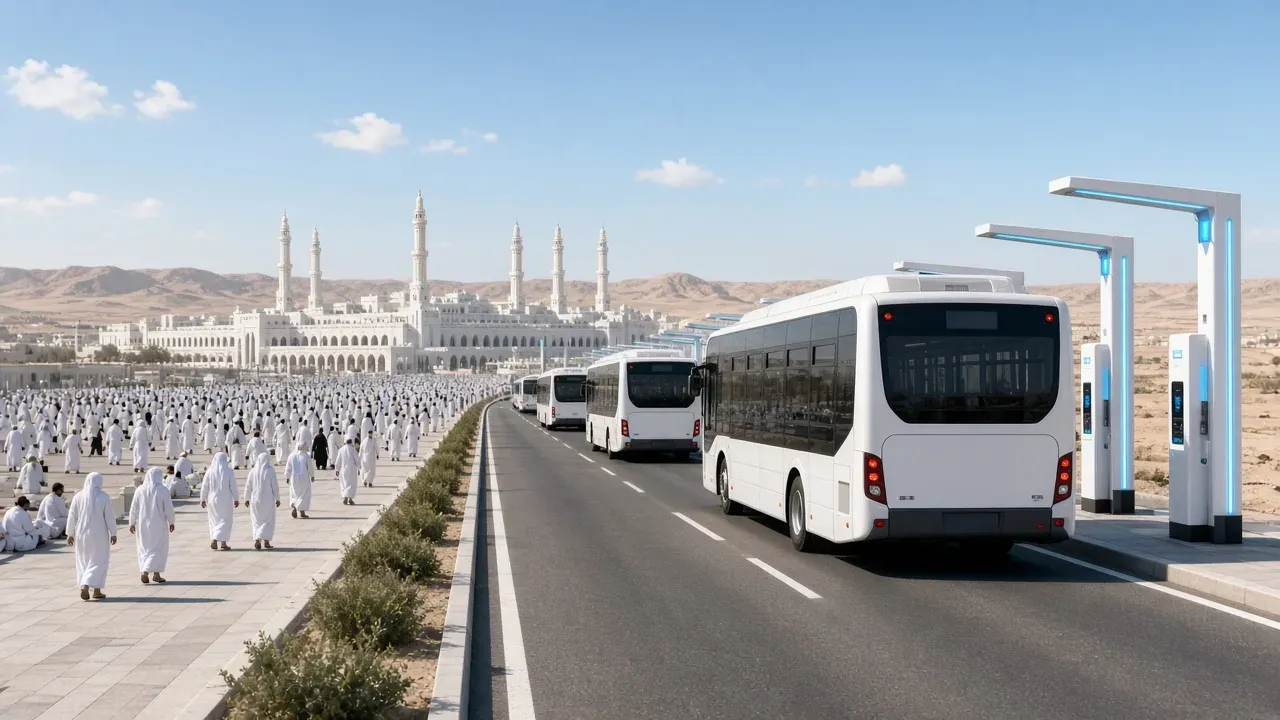
Some transit projects come with a fairly forgiving margin for error. If a bus is a few minutes late, most riders shrug it off. Masar Destination in Makkah was never going to be that kind of project. It is a landmark mixed use development serving enormous, constantly shifting numbers of visitors and residents, many of them pilgrims arriving from countries around the world, and it needed a transit solution that could keep up with that demand while meeting the environmental and operational standards expected of a flagship Saudi Vision 2030 development.
LMKR and TRVERSE delivered the first electric Bus Rapid Transit network at Masar Destination to meet that challenge, and the project is worth looking at closely, because it shows what it actually takes to run a zero emission transit system at real scale rather than as a small scale pilot.
The problem with "just electrify the buses"
It is tempting to think that building an electric BRT network mostly means swapping diesel buses for electric ones and calling it done. In reality, an electric fleet introduces an entirely new layer of operational complexity that a diesel network never had to deal with. Charging status has to be monitored continuously. Route plans have to account for how much range a vehicle actually has left, not just its schedule. And all of this has to happen without ever creating a situation where a bus runs low on charge in the middle of a high traffic corridor serving thousands of people a day.
Masar Destination's requirements made this even more demanding. The solution needed to be zero emission, capable of handling high density peak flows, and fully integrated with the broader Masar mobility and hospitality ecosystem, not operating as a standalone system bolted onto the site.
What actually got built
The deployment covered a full electric BRT fleet integrated with the TRVERSE platform, alongside automated fare collection built to support contactless and mobile payment for both domestic and international visitors. That payment flexibility matters more here than on most transit networks, given how many different countries and payment habits converge at a single site like Masar.
On the fleet side, TRVERSE built in EV specific charging status monitoring and route optimisation, so operators always know exactly how much charge each vehicle has and can plan routes accordingly, rather than discovering a problem only when a bus is already running low. AI based analytics support driver assistance and behaviour management, adding another layer of safety and efficiency on top of the electric fleet itself.
Because the site serves such an international mix of visitors, the Intelligent Transport System component includes real time passenger information delivered in both Arabic and English, ensuring that arrival times and route information are actually usable by the people relying on them, regardless of which language they read most comfortably. The entire deployment was carried out in partnership with LMKR across the full Masar site infrastructure, reflecting how deeply integrated the transit system needed to be with everything else happening on site.
What "zero emission" actually delivers, beyond the obvious
The most visible outcome is straightforward: zero direct emissions from BRT operations. That matters on its own, but the ripple effects go further. A high capacity electric fleet operating reliably at a site like Masar Destination is also a working demonstration that zero emission mass transit can hold up under real world, high density conditions, not just in a controlled pilot environment.
The project also delivered multi language, multi currency contactless payment support, full EV fleet monitoring and charging management, and clear alignment with Saudi Vision 2030's sustainable mobility targets. Put together, this is not just an electric bus network, it is a case study in what it takes to run one properly at a site where failure is not a quiet inconvenience, it is highly visible to an international audience.
Why this project matters beyond Makkah
Plenty of cities and developers are weighing whether an electric BRT fleet is actually viable at scale, or whether it only works in smaller, lower demand settings. Masar Destination is a useful answer to that question, precisely because it was never a low stakes environment to begin with. High visitor volume, international audiences, and the operational standards expected of a Vision 2030 flagship project all raised the bar for what "working reliably" actually meant.
The lesson that carries over to other networks is less about electric vehicles specifically and more about integration. An EV fleet only works at scale when charging status, route planning, fare collection, and passenger information are all part of one connected system, not separate projects that happen to share the same buses.
Considering an electric or low emission transit network for your own city or development? Talk to TRVERSE about what it would take to build it right.